
Ulcfg Ps2 Editor Fixed
State of the art timing analysis
with industry-hardened methods and tools.
State of the art timing analysis
with industry-hardened methods and tools.
...with industry-hardened methods and tools. T1 empowers and enables. T1 is the most frequently deployed timing tool in the automotive industry , being used for many years in hundreds of mass-production projects.
As a worldwide premiere, the ISO 26262 ASIL‑D certified T1-TARGET-SW allows safe instrumentation based timing analysis and timing supervision. In the car. In mass-production.
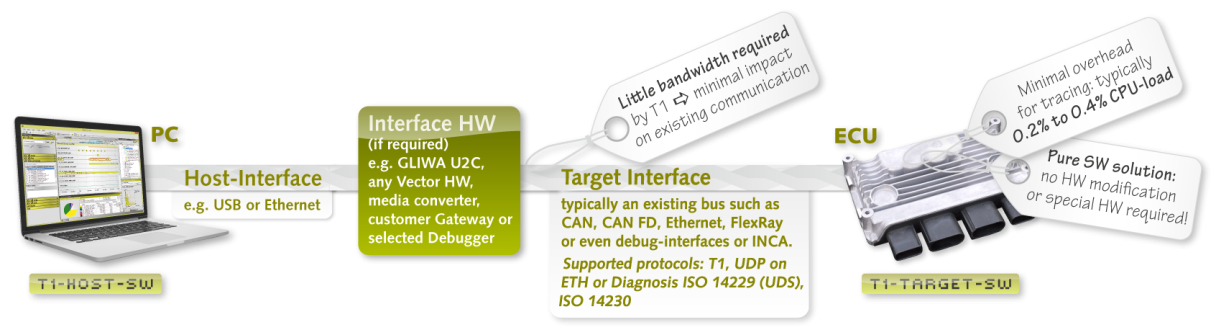
T1.timing comes with two extension options. Add-on product T1.streaming provides the possibility to stream trace data continuously — over seconds, minutes, hours or even days. Add-on product T1.posix supports POSIX operating systems such as Linux or QNX.
T1.timing comes with a modular concept and several plug-ins which are described in the following. Plug-ins can be easily enabled or disabled at compile-time using dedicated compiler switches such as T1_DISABLE_T1_CONT. To disable T1 altogether, it is sufficient to disable compiler switch T1_ENABLE which leaves the system in a state as of before the T1 integration.
The Ultimate Guide to ULCFG PS2 Editor: Modify and Optimize Your PlayStation 2 Games
: A command-line alternative for advanced users on Linux or Windows. It allows you to add, delete, and list games directly via terminal, ensuring entries are correctly written to the Common Maintenance Tasks Adding Games : When you split a new game (often using USBExtreme or USBUtil), the tool must update so OPL can "see" the new entry. Fixing Missing Games
Switch to the "Stables" tab to manage groups like Evolution or Team Angle. The editor allows you to change the team name, assign up to four members, designate their manager, and set their entrance logic. This ensures that custom factions walk out together with the correct team animations. Step 5: Save and Re-insert
You might wonder, "Can't I just reinstall the game?" Yes, but that takes hours. An editor allows you to manipulate the database instantly.
It acts as an index or directory map for your games.
A comprehensive management tool for OPL that includes a built-in CFG editor. It helps you manage game art, descriptions, and compatibility modes alongside your configuration files.
ULCFG PS2 Editor is a niche utility used by modders and retro gaming enthusiasts to view and modify ULCFG files for PlayStation 2 memory cards and game saves. ULCFG (short for “User/Utility Configuration”) files typically store configuration data and metadata associated with save files, such as user names, icons, license or entitlement flags, timestamps, and small settings that games or the PS2 system use to present saves in the console’s browser. An editor for these files gives users direct access to that metadata, enabling repair, customization, or compatibility fixes for saves across different memory cards, regions, or emulator setups.
Without a properly edited ul.cfg , your USB loader will not display or boot your games. Best ul.cfg Editor Tools
ULCFG PS2 Editor – Draft
This public link is valid for 7 days and shares a thread, including any personal information you added. This link or copies made by others cannot be deleted. If you share with third parties, their policies apply. Can’t copy the link right now. Try again later.
Right-click the file and extract it to a dedicated working folder on your PC. of the original file immediately. Step 2: Analyze the Structure
For POSIX-based projects, see T1.posix.
The Ultimate Guide to ULCFG PS2 Editor: Modify and Optimize Your PlayStation 2 Games
: A command-line alternative for advanced users on Linux or Windows. It allows you to add, delete, and list games directly via terminal, ensuring entries are correctly written to the Common Maintenance Tasks Adding Games : When you split a new game (often using USBExtreme or USBUtil), the tool must update so OPL can "see" the new entry. Fixing Missing Games
Switch to the "Stables" tab to manage groups like Evolution or Team Angle. The editor allows you to change the team name, assign up to four members, designate their manager, and set their entrance logic. This ensures that custom factions walk out together with the correct team animations. Step 5: Save and Re-insert
You might wonder, "Can't I just reinstall the game?" Yes, but that takes hours. An editor allows you to manipulate the database instantly.
It acts as an index or directory map for your games.
A comprehensive management tool for OPL that includes a built-in CFG editor. It helps you manage game art, descriptions, and compatibility modes alongside your configuration files.
ULCFG PS2 Editor is a niche utility used by modders and retro gaming enthusiasts to view and modify ULCFG files for PlayStation 2 memory cards and game saves. ULCFG (short for “User/Utility Configuration”) files typically store configuration data and metadata associated with save files, such as user names, icons, license or entitlement flags, timestamps, and small settings that games or the PS2 system use to present saves in the console’s browser. An editor for these files gives users direct access to that metadata, enabling repair, customization, or compatibility fixes for saves across different memory cards, regions, or emulator setups.
Without a properly edited ul.cfg , your USB loader will not display or boot your games. Best ul.cfg Editor Tools
ULCFG PS2 Editor – Draft
This public link is valid for 7 days and shares a thread, including any personal information you added. This link or copies made by others cannot be deleted. If you share with third parties, their policies apply. Can’t copy the link right now. Try again later.
Right-click the file and extract it to a dedicated working folder on your PC. of the original file immediately. Step 2: Analyze the Structure
| Vendor | Operating System |
|---|---|
| Customer | Any in-house OS** |
| Customer | No OS - scheduling loop plus interrupts** |
| Elektrobit | EB tresos AutoCore OS |
| Elektrobit | EB tresos Safety OS |
| ETAS | RTA-OS |
| GLIWA | gliwOS |
| HighTec | PXROS-HR |
| Hyundai AutoEver | Mobilgene |
| KPIT Cummins | KPIT** |
| Siemens | Capital VSTAR OS |
| Micriμm | μC/OS-II** |
| Vector | MICROSAR-OS |
| Amazon Web Services | FreeRTOS** |
| WITTENSTEIN high integrity systems | SafeRTOS** |
| Qorix | Qorix Classic |
| Embedded Office | Flexible Safety RTOS |
(**) T1 OS adaptation package T1-ADAPT-OS required.
| Target Interface | Comment |
|---|---|
| CAN | Low bandwidth requirement: typically one CAN message every 1 to 10ms. The bandwidth consumed by T1 is scalable and strictly deterministic. |
| CAN FD | Low bandwidth requirement: typically one CAN message every 1 to 10ms. The bandwidth consumed by T1 is scalable and strictly deterministic. |
| Diagnostic Interface | The diagnostic interface supports ISO14229 (UDS) as well as ISO14230, both via CAN with transportation protocol ISO15765-2 (addressing modes 'normal' and 'extended'). The T1-HOST-SW connects to the Diagnostic Interface using CAN. |
| Ethernet (IP:TCP, UDP) | TCP and UDP can be used, IP-address and port can be configured. |
| FlexRay | FlexRay is supported via the diagnostic interface and a CAN bridge. |
| Serial Line | Serial communication (e.g. RS232) is often used if no other communication interfaces are present. On the PC side, an USB-to-serial adapter is necessary. |
| JTAG/DAP | Interfaces exist to well-known debug environments such as Lauterbach TRACE32, iSYSTEM winIDEA and PLS UDE. The T1 JTAG interface requires an external debugger to be connected and, for data transfer, the target is halted. TriCore processors use DAP instead of JTAG. |
