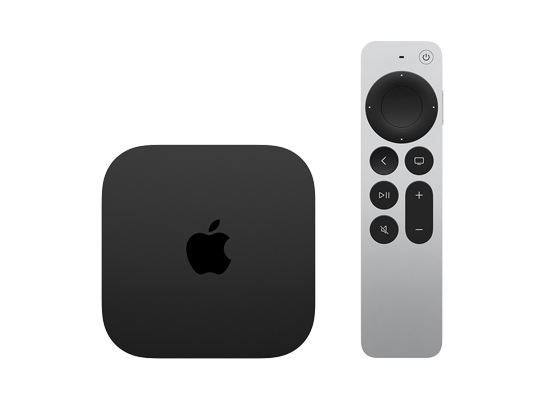
Download the latest beta firmware for iPhone, iPad, Mac, Apple Vision Pro, and Apple TV. Check the signing status of the beta firmware.
You might find installing IPSW files onto your device challenging without guidance. Follow the installation steps below, and you'll be able to do it yourself.
Need more help?
Read A Step-by-Step Guide
It supports various academic styles, making it ideal for theses and dissertation submissions. Conclusion
of the Scientific WorkPlace software or a different academic article?
The company, MacKichan Software, sold two main products:
Scientific WorkPlace 6.1 is a software program designed for writing, editing, and publishing mathematical and scientific documents. It integrates a word processor with a computer algebra system (CAS). This combination allows users to type complex mathematical equations and perform mathematical computations directly within the same interface. Key Features of Version 6.1
"Close the blast doors," Aris said, his hand hovering over the emergency shutdown. "We have to abort."
: Requires Windows 8 or later and an installation of MiKTeX for typesetting.
: Use Typeset → Preview PDF to generate a professionally formatted version of your document. PDF files are typically saved in the \SWPDocs directory.
One of the software’s main selling points is generating publication-ready LaTeX. The 6.1 verified build corrects a critical bug from earlier betas where certain Unicode characters would interfere with \cite{} commands. Outputs now pass IEEE and Elsevier’s automated validation tools on the first pass.
Following a major transition by its parent developer, understanding the "verified" status, licensing, and functional differences of version 6.1 is critical for modern academic setups. The "Verified" Status of Scientific WorkPlace 6.1
If you've come across the term "Scientific WorkPlace 61 verified," you're likely a researcher, academic, or student trying to navigate the complex world of scientific word processing. For decades, Scientific WorkPlace (SWP) from MacKichan Software was the gold standard for anyone who needed to blend complex mathematical notation with LaTeX's powerful typesetting in an easy-to-use graphical interface. Version 6.1 represented the final major iteration of this software.
It supports various academic styles, making it ideal for theses and dissertation submissions. Conclusion
of the Scientific WorkPlace software or a different academic article?
The company, MacKichan Software, sold two main products:
Scientific WorkPlace 6.1 is a software program designed for writing, editing, and publishing mathematical and scientific documents. It integrates a word processor with a computer algebra system (CAS). This combination allows users to type complex mathematical equations and perform mathematical computations directly within the same interface. Key Features of Version 6.1
"Close the blast doors," Aris said, his hand hovering over the emergency shutdown. "We have to abort."
: Requires Windows 8 or later and an installation of MiKTeX for typesetting.
: Use Typeset → Preview PDF to generate a professionally formatted version of your document. PDF files are typically saved in the \SWPDocs directory.
One of the software’s main selling points is generating publication-ready LaTeX. The 6.1 verified build corrects a critical bug from earlier betas where certain Unicode characters would interfere with \cite{} commands. Outputs now pass IEEE and Elsevier’s automated validation tools on the first pass.
Following a major transition by its parent developer, understanding the "verified" status, licensing, and functional differences of version 6.1 is critical for modern academic setups. The "Verified" Status of Scientific WorkPlace 6.1
If you've come across the term "Scientific WorkPlace 61 verified," you're likely a researcher, academic, or student trying to navigate the complex world of scientific word processing. For decades, Scientific WorkPlace (SWP) from MacKichan Software was the gold standard for anyone who needed to blend complex mathematical notation with LaTeX's powerful typesetting in an easy-to-use graphical interface. Version 6.1 represented the final major iteration of this software.