Attribution Creative Commons Noncommercial No Derivatives Share Alike Zero

Mumbai Police 2013 Tamil Dubbed Info

Without spoiling the ending, Mumbai Police features one of the most courageous climaxes in mainstream Indian cinema history. It challenged deep-seated societal taboos and toxic masculinity. Tamil audiences, known for appreciating progressive and boundary-pushing cinema, lauded the film's courage to defy traditional "hero" archetypes. Technical Brilliance and Performances

So, grab your popcorn, turn off the lights, and get ready for a police procedural that ends not with a gunshot, but with a heartbreaking whisper. Mumbai Police in Tamil is not just a movie—it is a masterclass in storytelling.

Just moments before he can reveal the murderer's name to his superior, Farhan (Rahman), Antony is involved in a catastrophic car accident. mumbai police 2013 tamil dubbed

While there is no official version of the 2013 Malayalam film Mumbai Police , the movie is widely available for streaming in its original language with subtitles. This neo-noir psychological thriller, directed by Rosshan Andrrews , remains a cult classic for its bold storytelling and unexpected climax. Where to Watch Online

The story revolves around a police officer named Dy. SP. Ajay Bhardwaj (played by Ajai Vasudev), who faces challenges in his personal and professional life. He then tries to reform a juvenile offender and a misguided youth. Without spoiling the ending, Mumbai Police features one

The final 20 minutes of Mumbai Police rely entirely on dialogue. The confession scene between Antony and Aaryan is a masterclass in writing. In the Tamil dubbed version, the pathos is retained. The words for "fear," "love," and "betrayal" hit harder for a Tamil audience because they are delivered in their mother tongue.

Antony survives the crash but suffers from severe partial amnesia, losing his memory, his core personality traits, and the crucial information regarding Aryan's killer. Farhan, desperate for justice and trusting only Antony, reassigns him to the case in absolute secrecy. The rest of the film follows a "new" Antony Moses—now gentle, uncertain, and stripped of his former arrogance—re-investigating his own past steps to uncover the truth. Why the Tamil Dubbed Version Gained Traction Technical Brilliance and Performances So, grab your popcorn,

With his memory wiped, Antony is tasked with re-investigating the case from scratch. He must hide his condition from the public and his fellow officers while navigating a web of secrets, including his own past. The film is celebrated for its non-linear storytelling and a that challenges traditional Indian cinematic tropes regarding masculinity and heroism. Cast and Crew Mumbai Police (2013) - Letterboxd

The narrative of Mumbai Police revolves around ACP Antony Moses (Prithviraj Sukumaran), a rogue but highly efficient officer in the Kerala Police. Antony is part of a close-knit trio of officers known affectionately as the "Mumbai Police," which also includes City Police Commissioner Farhan Aman (Rahman) and ACP Aryan John Jacob (Jayasurya).

This public link is valid for 7 days and shares a thread, including any personal information you added. This link or copies made by others cannot be deleted. If you share with third parties, their policies apply. Can’t copy the link right now. Try again later.

Poor dubbing can easily ruin a brilliant film. Fortunately, the Tamil-dubbed version of Mumbai Police features excellent voice acting that accurately translates the intense, sharp dialogue delivery of the original Malayalam script without losing its emotional weight.
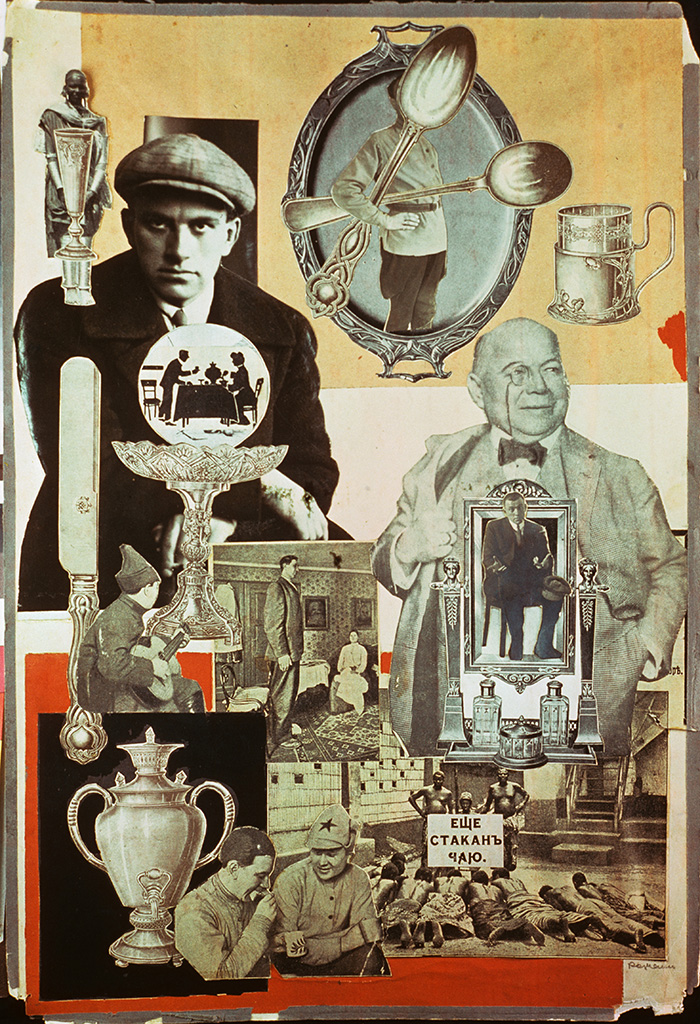
Fig. 1. — Brigade KGK (Viktor Koretsky [1909–98], Vera Gitsevich [1897–1976], and Boris Knoblok [1903–84]). “We had to overcome among the people in charge of trade the unhealthy habit of distributing goods mechanically; we had to put a stop to their indifference to the demand for a greater range of goods and to the requirements of the consumers.” From the 16th to the 17th Congress of the All-Union Communist Party (Bolsheviks), 1934, no. 57, gelatin silver print, 22.7 × 17 cm. Los Angeles, Getty Research Institute, 2014.R.25.
Fig. 2. — Brigade KGK (Viktor Koretsky [1909–98], Vera Gitsevich [1897–1976], and Boris Knoblok [1903–84]). “There is still among a section of Communists a supercilious, disdainful attitude toward trade in general, and toward Soviet trade in particular. These Communists, so-called, look upon Soviet trade as a matter of secondary importance, not worth bothering about.” From the 16th to the 17th Congress of the All-Union Communist Party (Bolsheviks), 1934, no. 56, gelatin silver print, 22.7 × 17 cm. Los Angeles, Getty Research Institute, 2014.R.25.
Collage of photographs showing Vladimir Mayakovsky surrounded by a silver samovar, cutlery, and trays; two soldiers enjoying tea; a giant man in a bourgeois parlor; and nine African men lying prostrate before three others who hold a sign that reads, in Cyrillic letters, “Another cup of tea.”
Fig. 3. — Aleksandr Rodchenko (Russian, 1890–1956). Draft illustration for Vladimir Mayakovsky’s poem “Pro eto,” accompanied by the lines “And the century stands / Unwhipped / the mare of byt won’t budge,” 1923, cut-and-pasted printed papers and gelatin silver photographs, 42.5 × 32.5 cm. Moscow, State Mayakovsky Museum. Art © 2024 Estate of Alexander Rodchenko / UPRAVIS, Moscow / ARS, NY. Photo: Art Resource.
Fig. 4. — Boris Klinch (Russian, 1892–1946). “Krovovaia sobaka,” Noske (“The bloody dog,” Noske), photomontage, 1932. From Proletarskoe foto, no. 11 (1932): 29. Los Angeles, Getty Research Institute, 85-S956.
Fig. 5. — Brigade KGK (Viktor Koretsky [1909–98], Vera Gitsevich [1897–1976], and Boris Knoblok [1903–84]). “We have smashed the enemies of the Party, the opportunists of all shades, the nationalist deviators of all kinds. But remnants of their ideology still live in the minds of individual members of the Party, and not infrequently they find expression.” From the 16th to the 17th Congress of the All-Union Communist Party (Bolsheviks), 1934, no. 62, gelatin silver print, 22.7 × 17 cm. Los Angeles, Getty Research Institute, 2014.R.25.
Fig. 6. — Brigade KGK (Viktor Koretsky [1909–98], Vera Gitsevich [1897–1976], and Boris Knoblok [1903–84]). “There are two other types of executive who retard our work, hinder our work, and hold up our advance. . . . People who have become bigwigs, who consider that Party decisions and Soviet laws are not written for them, but for fools. . . . And . . . honest windbags (laughter), people who are honest and loyal to Soviet power, but who are incapable of leadership, incapable of organizing anything.” From the 16th to the 17th Congress of the All-Union Communist Party (Bolsheviks), 1934, no. 70, gelatin silver print, 22.7 × 17 cm. Los Angeles, Getty Research Institute, 2014.R.25.
Fig. 7. — Artist unknown. “The Social Democrat Grzesinski,” from Proletarskoe foto, no. 3 (1932): 7. Los Angeles, Getty Research Institute, 85-S956.
Fig. 8A. — Pavel Petrov-Bytov (Russian, 1895–1960), director. Screen capture from the film Cain and Artem, 1929. Image courtesy University of California, Berkeley, Berkeley Art Museum and Pacific Film Archive Library.
Fig. 8B. — Pavel Petrov-Bytov (Russian, 1895–1960), director. Screen capture from the film Cain and Artem, 1929. Image courtesy University of California, Berkeley, Berkeley Art Museum and Pacific Film Archive Library.
Fig. 8C. — Pavel Petrov-Bytov (Russian, 1895–1960), director. Screen capture from the film Cain and Artem, 1929. Image courtesy University of California, Berkeley, Berkeley Art Museum and Pacific Film Archive Library.
Fig. 9. — Herbert George Ponting (English, 1870–1935). Camera Caricature, ca. 1927, gelatin silver prints mounted on card, 49.5 × 35.6 cm (grid). London, Victoria and Albert Museum, RPS.3336–2018. Image © Royal Photographic Society Collection / Victoria and Albert Museum, London.
Fig. 10. — Aleksandr Zhitomirsky (Russian, 1907–93). “There are lucky devils and unlucky ones,” cover of Front-Illustrierte, no. 10, April 1943. Prague, Ne Boltai! Collection. Art © Vladimir Zhitomirsky.
of