









Lumerical Fdtd Tutorial Pdf ((free))

lumerical fdtd tutorial pdf

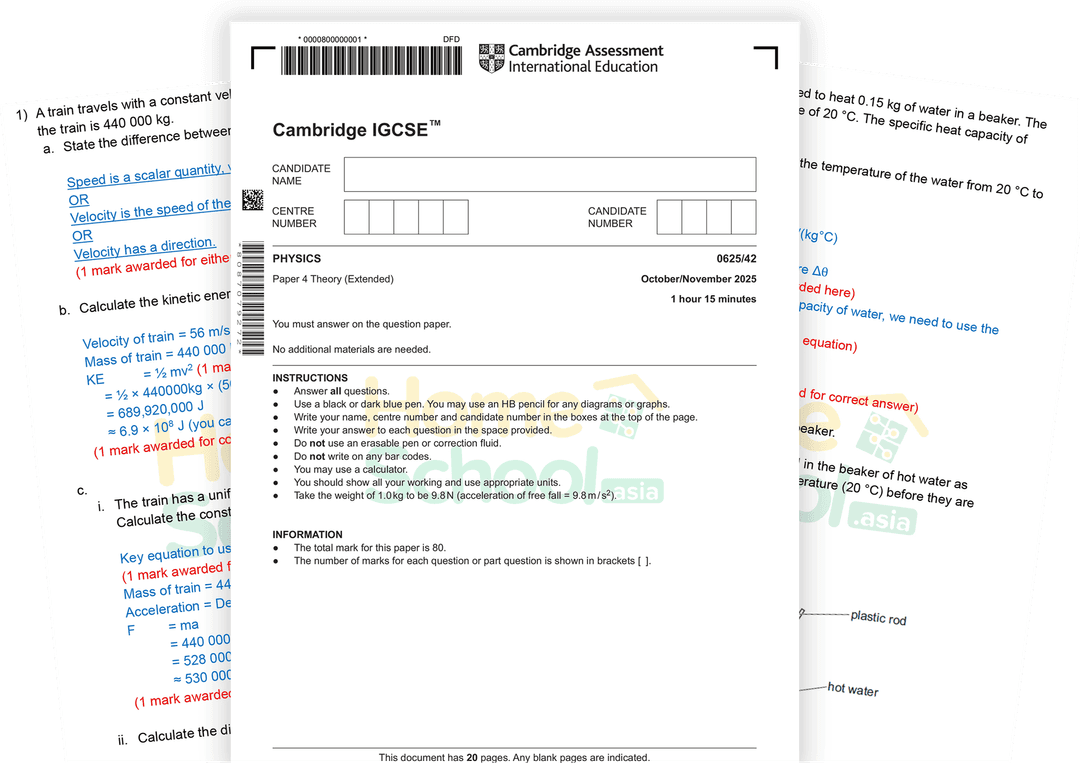
Access a ready-to-download collection of CIE Past Papers for IGCSE and AS/A Levels. Get yearly compiled past papers with the Marking Scheme, Examiner Report, Solved Past Papers, and Exam Timetable for Free.

CIE Past Papers Collection
Free Solved Past Paper

Access expert-solved Cambridge past papers with detailed written solutions and video walkthroughs.

Free Download

Get free access to Past Papers, Marking Schemes, Examiner Reports, Exam Timetables, and more for IGCSE and AS/A Level subjects.

Seamless PDF Access & Offline Reading

lumerical fdtd tutorial pdf

Easily access and navigate the Past Papers with our built-in PDF reader or download it for offline reading.

PDF Access
Built-in PDF ViewerNo App Needed
Free DownloadFor Offline Reading
Easy NavigationBy Subject, Year & Session

Everything You Need to Ace Your Cambridge Exams

Mock Exam advertisementMock Exam advertisement

Everything You Need for Exam Practice

Lumerical Fdtd Tutorial Pdf ((free))

Introduction to FDTD and numerical concepts

Click to view the fit. Ensure the green line (sampled data) closely matches the blue line (Lumerical's multi-coefficient material model) over your wavelength range (e.g., Step 2: Create Geometries Next, layout the physical structures.

Verifies that your physical geometry and mesh are correctly resolved by the software before running.

Automating tasks using Python, which is critical for complex optimization loops. Conclusion lumerical fdtd tutorial pdf

Tip: If your structure is perfectly symmetric, use or Anti-Symmetric boundaries to cut your simulation time by 50% or 75%. Step 4: Set Up Mesh Settings Mesh size determines accuracy and calculation time.

Since I cannot directly provide a downloadable PDF file, I have compiled a below.

Mandatory for periodic structures when the light source strikes at an angle ( Avoiding Numerical Divergence Introduction to FDTD and numerical concepts Click to

Import GDSII files directly for complex integrated photonic circuits.

Automate parameter sweeps (e.g., varying the radius of a nano-disk). Perform custom post-processing of data. Export high-resolution plots for publication. Ansys Lumerical FDTD | Simulation for Photonic Components

). If your simulation ends at 100% time without hitting this threshold, increase the simulation time to prevent spectral distortion. Automating tasks using Python, which is critical for

To save this guide as a handy reference document on your local drive:

When you open Lumerical FDTD, you are greeted by the Integrated Development Environment (IDE). Familiarizing yourself with these five core regions will drastically speed up your workflow:

Set the simulation time, mesh refinement, and boundary conditions (e.g., Perfectly Matched Layers or PML to prevent reflections).


Easy Interface Icon
2

Easy Interface

for seamless navigation

Search by subject, year, or paper type and get exactly what you want to practice in just a few clicks!

Updated Resources Icon
3

Updated Resources

for effective practice

Stay updated with the most recent collection of CIE Past Papers including their marking schemes and examiner's solutions.

Introduction to FDTD and numerical concepts

Click to view the fit. Ensure the green line (sampled data) closely matches the blue line (Lumerical's multi-coefficient material model) over your wavelength range (e.g., Step 2: Create Geometries Next, layout the physical structures.

Verifies that your physical geometry and mesh are correctly resolved by the software before running.

Automating tasks using Python, which is critical for complex optimization loops. Conclusion

Tip: If your structure is perfectly symmetric, use or Anti-Symmetric boundaries to cut your simulation time by 50% or 75%. Step 4: Set Up Mesh Settings Mesh size determines accuracy and calculation time.

Since I cannot directly provide a downloadable PDF file, I have compiled a below.

Mandatory for periodic structures when the light source strikes at an angle ( Avoiding Numerical Divergence

Import GDSII files directly for complex integrated photonic circuits.

Automate parameter sweeps (e.g., varying the radius of a nano-disk). Perform custom post-processing of data. Export high-resolution plots for publication. Ansys Lumerical FDTD | Simulation for Photonic Components

). If your simulation ends at 100% time without hitting this threshold, increase the simulation time to prevent spectral distortion.

To save this guide as a handy reference document on your local drive:

When you open Lumerical FDTD, you are greeted by the Integrated Development Environment (IDE). Familiarizing yourself with these five core regions will drastically speed up your workflow:

Set the simulation time, mesh refinement, and boundary conditions (e.g., Perfectly Matched Layers or PML to prevent reflections).

Ad BannerAd Banner
