





MapIT.ai is building Makerspace Management Solution for effective management and utilization of makerspaces across 11 colleges in India including 3 institutes of emminence.
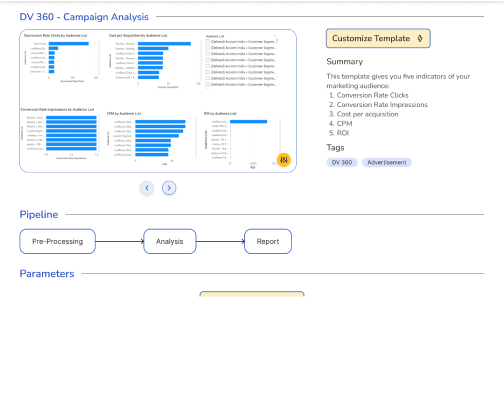
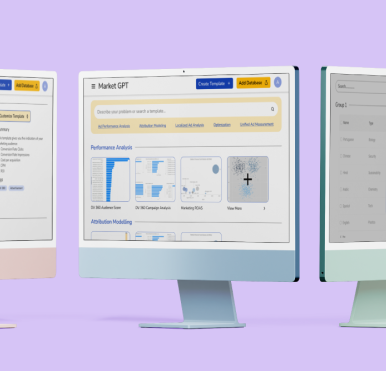
MapIT.ai is building AI Powered Data Analysis solution which integrates your marketing data (google marketing platform, facebook ads, linkedin ads) and sales data (online and offline) to provide insights into the effectiveness of your ad campaigns and marketing ROI.




To adjust for real-world heat loss, the final permissible short-circuit current ( ) is modified by a non-adiabatic factor, denoted as
) temperatures are strictly dictated by the cable insulation type. Exceeding these limits permanently ruins the integrity of the cable jacket: : PVC (Polyvinyl Chloride) : 140∘C140 raised to the composed with power C for larger cross-sections) Step-by-Step Calculation Example Consider a power system utilizing a 50 mm2m m squared
Result: Using IEC 60949 allows you to safely utilize the cable's capacity more accurately, gaining nearly 5kA of fault capability.
IEC 60949 bridges the gap between the safe-but-conservative adiabatic approach and the more accurate non-adiabatic reality. The official method, as outlined by the International Electrotechnical Commission (IEC), involves three key steps:
Because it proves cables can withstand slightly more current than simpler models suggest, it can prevent engineers from unnecessarily over-sizing cable armoring and screens, saving significant material costs.
Because the conductor is large (300 $mm^2$) and the duration is 1 second, heat escapes into the insulation. Let's say the calculation yields $\epsilon = 1.12$.
Q: How can I obtain IEC 949 PDF? A: The IEC 949 PDF document can be obtained from the International Electrotechnical Commission (IEC) website or through authorized distributors.
By accounting for this outward heat migration, engineers often find that a cable can safely withstand a slightly higher short-circuit current than what the standard adiabatic formula predicts. The Master Equations and Material Constants
It provides the mathematical formulas needed to calculate how much short-circuit current a conductor can safely carry for a specific duration (usually less than 5 seconds) without exceeding its maximum temperature limit. The History of the Naming
: Accessing the standardized tables for thermal constants like specific heat and resistivity. Complex Layers


Build Software to automate business processes. Get more out of your team with limited resources.
Read Details
Manage and monitor your facilities with state of the art IoT solutions and get more out of your facilties.
Read Details

Build bespoke application on web and mobile to power your business.
Read DetailsTo adjust for real-world heat loss, the final permissible short-circuit current ( ) is modified by a non-adiabatic factor, denoted as
) temperatures are strictly dictated by the cable insulation type. Exceeding these limits permanently ruins the integrity of the cable jacket: : PVC (Polyvinyl Chloride) : 140∘C140 raised to the composed with power C for larger cross-sections) Step-by-Step Calculation Example Consider a power system utilizing a 50 mm2m m squared
Result: Using IEC 60949 allows you to safely utilize the cable's capacity more accurately, gaining nearly 5kA of fault capability.
IEC 60949 bridges the gap between the safe-but-conservative adiabatic approach and the more accurate non-adiabatic reality. The official method, as outlined by the International Electrotechnical Commission (IEC), involves three key steps:
Because it proves cables can withstand slightly more current than simpler models suggest, it can prevent engineers from unnecessarily over-sizing cable armoring and screens, saving significant material costs.
Because the conductor is large (300 $mm^2$) and the duration is 1 second, heat escapes into the insulation. Let's say the calculation yields $\epsilon = 1.12$.
Q: How can I obtain IEC 949 PDF? A: The IEC 949 PDF document can be obtained from the International Electrotechnical Commission (IEC) website or through authorized distributors.
By accounting for this outward heat migration, engineers often find that a cable can safely withstand a slightly higher short-circuit current than what the standard adiabatic formula predicts. The Master Equations and Material Constants
It provides the mathematical formulas needed to calculate how much short-circuit current a conductor can safely carry for a specific duration (usually less than 5 seconds) without exceeding its maximum temperature limit. The History of the Naming
: Accessing the standardized tables for thermal constants like specific heat and resistivity. Complex Layers


Diverse skills unified to create innovative solutions.
We’re happy to answer any questions you may have and help you determine which of our services best fit your needs.
You drop us a message. Or give us a call. To adjust for real-world heat loss, the final
We schedule a meeting to understand your needs The official method, as outlined by the International
We propose to you solutions that could advance your business to the next step