Everything You Need in a Free VPS Server — Enterprise Hardware, Zero Cost
Built on AMD EPYC 9454P (48-core, Zen 4) or Ampere Altra Max (128-core ARM64) — the only cloud hosting provider that lets you choose your processor architecture at deployment, completely free.
Every server runs on Micron 7450 PRO Gen4 NVMe delivering 15,000 MB/s read speeds and 1M+ IOPS — dramatically faster than competitors using SATA SSDs or Gen3 NVMe on their free tiers.
Complete administrative control of your virtual server. Install any software, configure security policies, deploy any application, and manage services without restrictions — on both x86 and ARM64 architectures.
Choose Ubuntu, Debian, CentOS, AlmaLinux, Rocky Linux, or Windows Server 2019/2022. Switch your OS anytime through the Proxmox control panel — no reinstall fees, no downtime penalties.
Every plan — including the free tier — includes Cloudflare Magic Transit DDoS mitigation, hardware firewalls, and intrusion detection. Enterprise-grade network security at zero cost.
Your server is live in under 60 seconds. Automated Proxmox VE provisioning selects your architecture, installs the OS, and delivers SSH or RDP credentials — no waiting, no manual approval queue.
Deploy in USA, UK, Germany, Singapore, India, Japan, and 18+ more regions. Pick the data center closest to your users for the lowest latency — all included on every plan at no extra charge.
Premium plans include DDR5-4800 ECC RDIMM on x86 nodes — error-correcting memory that prevents silent data corruption, a feature most providers charge significantly extra for.
Native Docker support on both x86 and ARM64 instances. KVM/QEMU virtualization via Proxmox VE 8.x with full nested virtualization, hardware isolation, and multi-arch container builds enabled.
Instant snapshots and automated backup scheduling via Proxmox. Restore your server to any previous state in minutes — all backups stored on separate NVMe arrays for complete redundancy.
Redundant infrastructure across global data centers ensures your workloads stay online. Automated failover, backup power systems, and 24/7 monitoring back every plan with a real SLA.
Certified engineers available round the clock via live chat, email, and ticketing system. Starter accounts get community support; professional and enterprise plans receive priority response times.
Chemmeen wasn't just a love story; it was a cultural treatise on the Marakkan (the taboo of the sea) and the rigid social codes of the fishing community. Suddenly, the matrilineal Tharavadu (ancestral home) became a character. The patina of monsoon rain on tile roofs became a mood. This was the birth of "cinema as anthropology."
Are there any you want to emphasize? Share public link
The formation of the Women in Cinema Collective (WCC) marked a historic shift, demanding safer workplaces and better representation. This cultural awakening is reflected in films like The Great Indian Kitchen (2021), which delivered a scathing critique of ingrained domestic patriarchy, and Kumbalangi Nights (2019), which deconstructed toxic masculinity and redefined the conventional idea of a "family."
Unlike the "Superhero" tropes of Bollywood or Tamil cinema, the Malayalam hero is usually ordinary. He is often unemployed, lacks distinct fighting skills, and relies on wit. This reflects the Malayali self-image: educated, skeptical, and cynical, yet resilient. Chemmeen wasn't just a love story; it was
Vidheyan (The Servant, 1993) – A chilling study of master-slave psychology.
In the 1930s and 40s, Kerala had one of the highest literacy rates in India. The people were readers. They devoured the works of S.K. Pottekkatt , M.T. Vasudevan Nair , and Vaikom Muhammad Basheer . When the first talkies arrived ( Balan , 1938), they were essentially filmed stage plays. But the real shift happened in the 1950s with the rise of the Navadhara (New Wave).
No discussion of Malayalam culture is complete without the "Gulf Boom." Starting in the 1970s, millions of Malayalis migrated to the Middle East for employment. This massive demographic shift drastically altered Kerala's economy and its cinema. This was the birth of "cinema as anthropology
: The 1965 film Chemmeen , adapted from Thakazhi's novel, became a global phenomenon. It won the National Film Award for Best Feature Film, proving that localized, culturally specific stories about coastal fishing communities could achieve universal acclaim.
Directors like Lijo Jose Pellissery ( Jallikattu , 2019) and Dileesh Pothan ( Thondimuthalum Driksakshiyum , 2017) shoot in real kitchens, real bus stops, and real police stations. The culture of Kerala—the excessive use of Pothu (sharing), the casteist slurs muttered under breath, the obsession with gold, the Christian Palliyil (church) politics—is presented raw, without filter.

Getting started has never been easier. No contracts, no hidden fees, and absolutely no credit card required. Your virtual private server is live in 60 seconds: He is often unemployed, lacks distinct fighting skills,
Our platform supports both Linux VPS and Windows VPS operating systems. Starter accounts get full access to all major Linux distributions. The Professional trial adds Windows Server 2019 and 2022 with full RDP access.
Supported operating systems include Ubuntu 20.04/22.04/24.04, Debian 11/12, CentOS 7/8/Stream, AlmaLinux, Rocky Linux, Fedora, and Windows Server with full Remote Desktop Protocol (RDP) support.
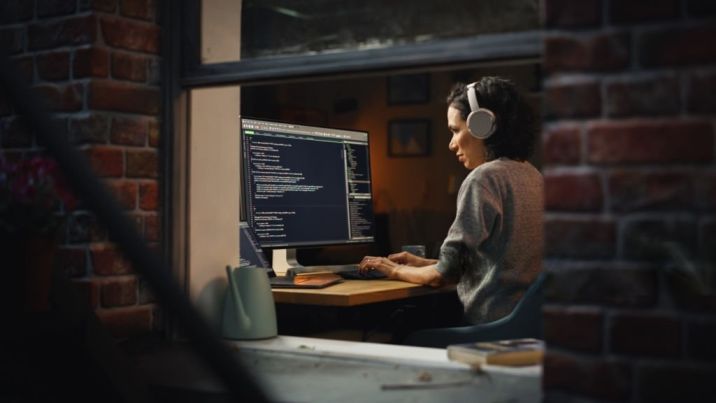
VPSWala's platform serves tens of thousands of users across very different use cases:
What You Can Do With Your Demo VPS Server Today
Chemmeen wasn't just a love story; it was a cultural treatise on the Marakkan (the taboo of the sea) and the rigid social codes of the fishing community. Suddenly, the matrilineal Tharavadu (ancestral home) became a character. The patina of monsoon rain on tile roofs became a mood. This was the birth of "cinema as anthropology."
Are there any you want to emphasize? Share public link
The formation of the Women in Cinema Collective (WCC) marked a historic shift, demanding safer workplaces and better representation. This cultural awakening is reflected in films like The Great Indian Kitchen (2021), which delivered a scathing critique of ingrained domestic patriarchy, and Kumbalangi Nights (2019), which deconstructed toxic masculinity and redefined the conventional idea of a "family."
Unlike the "Superhero" tropes of Bollywood or Tamil cinema, the Malayalam hero is usually ordinary. He is often unemployed, lacks distinct fighting skills, and relies on wit. This reflects the Malayali self-image: educated, skeptical, and cynical, yet resilient.
Vidheyan (The Servant, 1993) – A chilling study of master-slave psychology.
In the 1930s and 40s, Kerala had one of the highest literacy rates in India. The people were readers. They devoured the works of S.K. Pottekkatt , M.T. Vasudevan Nair , and Vaikom Muhammad Basheer . When the first talkies arrived ( Balan , 1938), they were essentially filmed stage plays. But the real shift happened in the 1950s with the rise of the Navadhara (New Wave).
No discussion of Malayalam culture is complete without the "Gulf Boom." Starting in the 1970s, millions of Malayalis migrated to the Middle East for employment. This massive demographic shift drastically altered Kerala's economy and its cinema.
: The 1965 film Chemmeen , adapted from Thakazhi's novel, became a global phenomenon. It won the National Film Award for Best Feature Film, proving that localized, culturally specific stories about coastal fishing communities could achieve universal acclaim.
Directors like Lijo Jose Pellissery ( Jallikattu , 2019) and Dileesh Pothan ( Thondimuthalum Driksakshiyum , 2017) shoot in real kitchens, real bus stops, and real police stations. The culture of Kerala—the excessive use of Pothu (sharing), the casteist slurs muttered under breath, the obsession with gold, the Christian Palliyil (church) politics—is presented raw, without filter.
Trusted by 50,000+ developers, students, and businesses worldwide
Our infrastructure powered by industry-leading hardware and technology partners